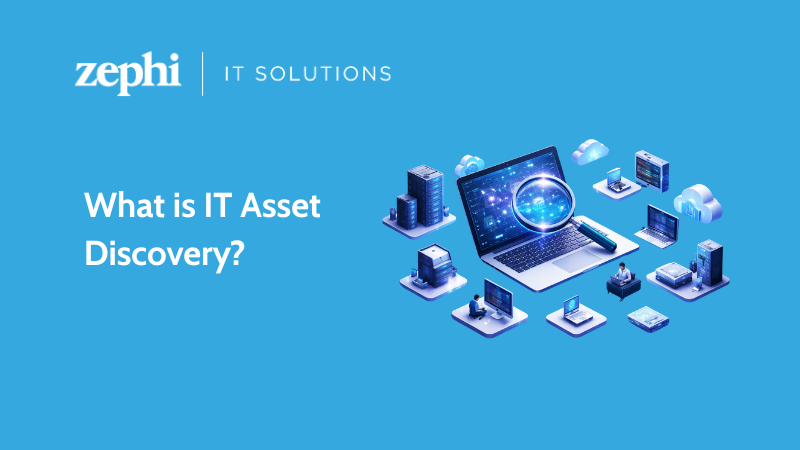
In today’s rapidly evolving tech landscape, understanding what sits on your network is more important than ever. IT asset discovery is the process that helps organisations identify, catalogue, and manage the devices, software, and services that make up their IT environment. By gaining visibility into assets across on-premises networks, cloud platforms, and hybrid environments, teams can improve security, compliance, and operational efficiency. In this post, we’ll explore what IT asset discovery means, why it matters, and how to implement an effective discovery program.
Introduction: setting the scene for IT asset discovery
Businesses of all sizes face a common challenge: shadow IT and unmanaged assets can lurk in the background, creating risks and inefficiencies. IT asset discovery is the practice of continuously scanning and inventorying the hardware, software, and services that a company uses. By defining assets and their relationships, organisations can establish a solid foundation for governance, risk management, and IT operations.
What constitutes IT assets?
Hardware assets
Servers, desktops, laptops, mobile devices, printers, network equipment, and IoT devices all count as IT assets. Asset discovery tools probe networks, endpoints, and devices to identify hardware models, serial numbers, firmware versions, and configurations.
Software assets
Installed applications, licenses, and cloud services are software assets that require tracking. Discovery methods may include agent-based collectors, network scanning, software inventory tools, and license management systems to ensure compliance and optimise usage.
Services and cloud assets
Beyond physical devices, IT asset discovery extends to services such as SaaS subscriptions, IaaS instances, and PaaS resources. Cloud assets can be dynamic, with instances scaling up and down, making continuous discovery essential.
Why IT asset discovery matters
Security and risk management
Unknown or unauthorised assets present security gaps. By identifying every asset, security teams can enforce patches, monitor for anomalies, and reduce the attack surface. IT asset discovery supports vulnerability management by linking discovered assets to known CVEs and security advisories.
Compliance and governance
Regulatory frameworks often require accurate asset inventories. Continuous discovery helps demonstrate control over data, software licenses, and hardware inventory, supporting audits and compliance reporting.
Operational efficiency and cost control
Knowing what assets exist and who owns them enables better capacity planning, lifecycle management, and budget forecasting. Discovery data feeds asset management, change management, and IT service management processes.
How IT asset discovery works
Scanning and fingerprinting
Discovery tools scan networks to detect devices and software. Fingerprinting techniques identify operating systems, applications, open ports, and services running on assets.
Agent-based vs. agentless approaches
Agent-based discovery relies on lightweight software installed on endpoints to report details and health. Agentless discovery scans over the network, collecting information without requiring software on every device. Each approach has trade-offs in coverage, performance, and security.
Relationship mapping and CMDB integration
A cornerstone of asset discovery is linking assets to a configuration management database (CMDB). By mapping relationships, such as which server hosts a particular application, organisations gain a holistic view of their environment, aiding incident response and change management.
Best practices for implementing IT asset discovery
Define scope and ownership
Clarify which assets to discover (hardware, software, cloud services) and who is responsible for maintaining the inventory. Clear ownership ensures data remains accurate and up-to-date.
Automate and standardise
Automated discovery reduces manual effort and improves consistency. Standardised data fields, tagging, and naming conventions simplify reporting and integration with CMDB and ITSM tools.
Establish data quality controls
Regularly audit discovery results for accuracy. Deduplicate records, resolve conflicting data, and verify asset statuses to maintain a trustworthy inventory.
Integrate with broader IT management processes
Asset discovery should feed into IT service management, security operations, and governance programs. Integration with vulnerability scanners, license management, and cloud cost controls enhances overall control.
Embrace continuous improvement
Asset landscapes evolve, especially with cloud adoption and remote work. Continuous improvement means scheduling regular scans, updating discovery rules, and refining asset classifications.
Challenges and considerations
Dynamic and shadow IT
Shadow IT can complicate discovery, as unsanctioned tools and services fly under the radar. Proactive monitoring and user awareness campaigns help mitigate this risk.
Data privacy and surveillance concerns
Asset discovery should balance visibility with privacy. Implement least-privilege data collection and ensure compliance with privacy regulations when collecting endpoint data.
Scalability and performance
Large enterprises require scalable discovery solutions that minimise network impact. Plan for phased rollouts and cloud-based discovery options to handle growth.
Final thoughts
IT asset discovery is a foundational practice for modern IT governance. By continuously identifying hardware, software, and cloud services, organisations gain better security, compliance, and operational efficiency. The core idea behind what is IT asset discovery is to illuminate an often complex and evolving landscape, turning scattered elements into a coherent, actionable inventory. With clear ownership, automated processes, and thoughtful integration into CMDB and ITSM workflows, asset discovery becomes not just a technical exercise but a strategic enabler for resilient and cost-effective IT operations. If you’re starting your journey, begin with a defined scope, invest in automation, and commit to ongoing refinement to keep pace with change. Contact the team of experts at Zephi IT Solutions on 01889 280010.